
More Boost or more Advanced Timing: Where Should You Make Power?

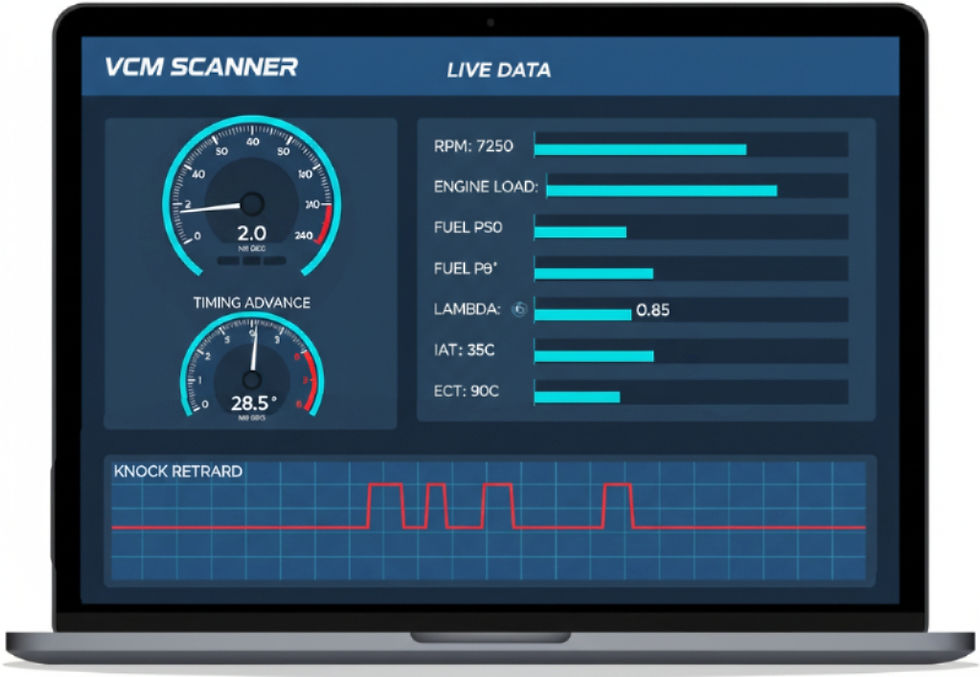
One of the most common questions when calibrating a forced induction engine is: If the engine has some room left, should we add more boost or more advanaced ignition timing?
When tuning a turbocharged or supercharged engine, a good general strategy is to achieve the desired airflow with as much boost as the combination can safely and efficiently support, then optimize ignition timing. Boost and timing make power in very different ways: increasing boost can increase the mass of air trapped in the cylinder, giving the application more oxygen to burn with additional fuel, and therefore more potential torque. Ignition timing doesn't add more air or fuel; it changes when combustion occurs so the existing air/fuel charge can produce its most effective cylinder pressure. This is why another 1 psi of efficient boost can often be more productive than simply adding another degree of timing.
That doesn't mean more boost is always better. Eventually, additional boost can push the turbo outside its efficient operating range, increasing compressor outlet temperature, turbine backpressure, manifold backpressure pushing back into the supercharger, and overall engine stress without providing a worthwhile increase in airflow. In addtion, this can also drastically increase pre-detination - aka knock.
The same diminishing return exists with ignition timing. As we approach MBT (Minimum Spark Advance for Best Torque), additional timing produces progressively less benefit. Once MBT is reached, adding timing doesn't produce additional torque—it simply consumes safety margin. Likewise, the absence of knock doesn't necessarily mean the engine wants more timing.
The goal of a great calibration isn't to maximize the boost number or the ignition-advance number. It's to find the combination that produces the desired torque efficiently and with adequate safety margin. If another pound of boost produces meaningful additional airflow and torque while the turbo, fuel system, and engine remain within their limits, use it. Then optimize timing to extract the most useful work from that cylinder charge. Boost gives the potential to make more power; ignition timing helps us efficiently extract that potential.
Typical rule is 1 PSI of boost can add 7HP or more (in higher boosted applications), whereas an additional degree of timing can add 2.5HP.


Comments